What a portfolio can show that a document cannot claim
A résumé line says you rebuilt the thing. A page can show what it looked like, which is a different kind of argument.
— showing costs a link and proves more than a sentence.
A résumé line is an assertion in one sentence. A page can show the thing. That is the whole of the difference, and it decides when a portfolio is worth building and when it is not.
The three things a page can carry
An artefact: an image, a screenshot, a document, a link that opens. Length: a description with a before and an after rather than a compressed clause. And context: why the work existed, what constrained it, what changed. A résumé has room for none of those, and it should not try.
Where the material comes from
The portfolio builder works from the roles, projects and outcomes already in your résumé. You switch on what belongs and correct each entry: a name, a year, one line about what changed, and optionally a description, a link, an image and tags. It does not write your entries and does not invent projects, which is the same refusal the rest of the product makes, described in what we refuse to generate.
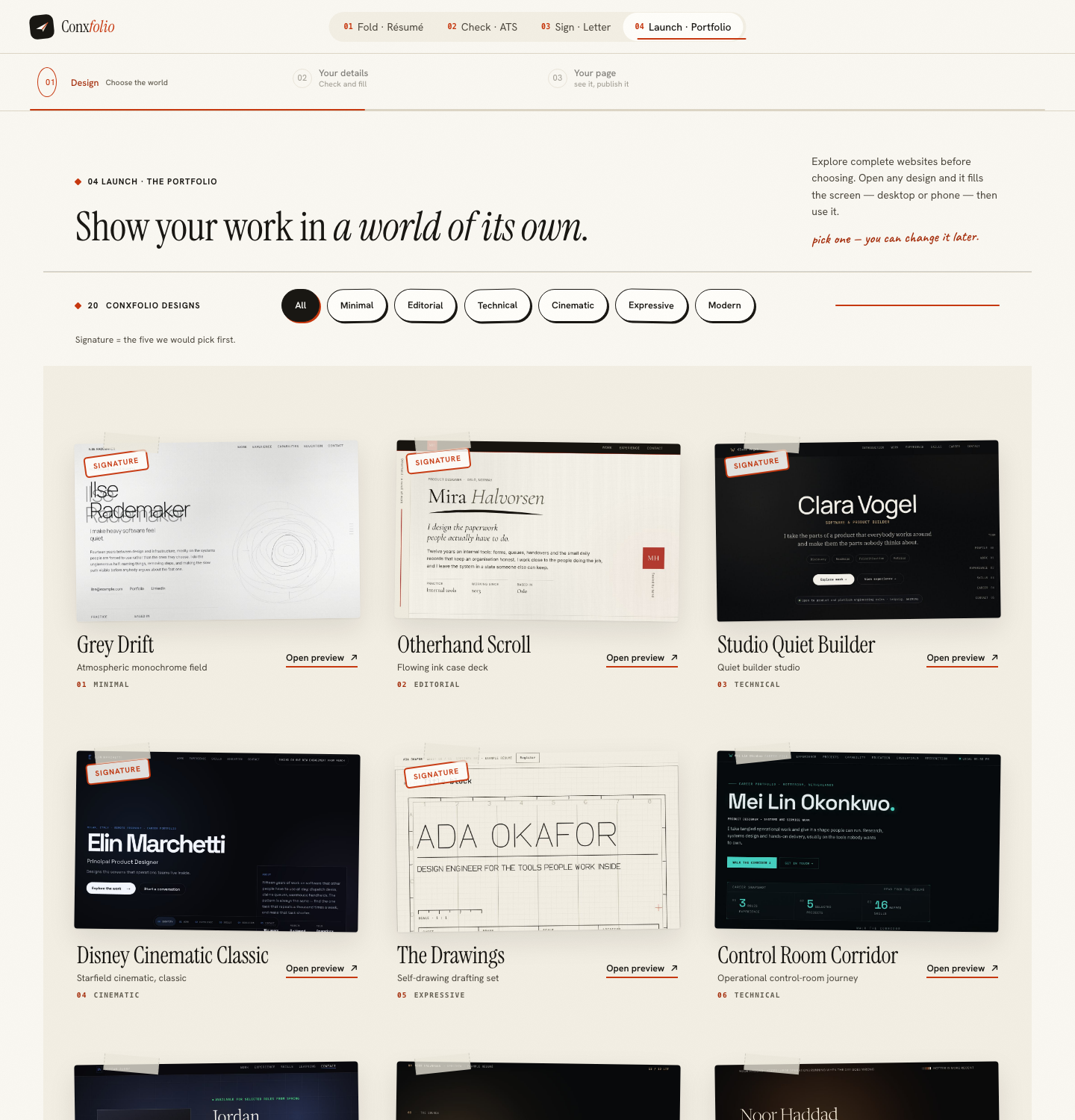
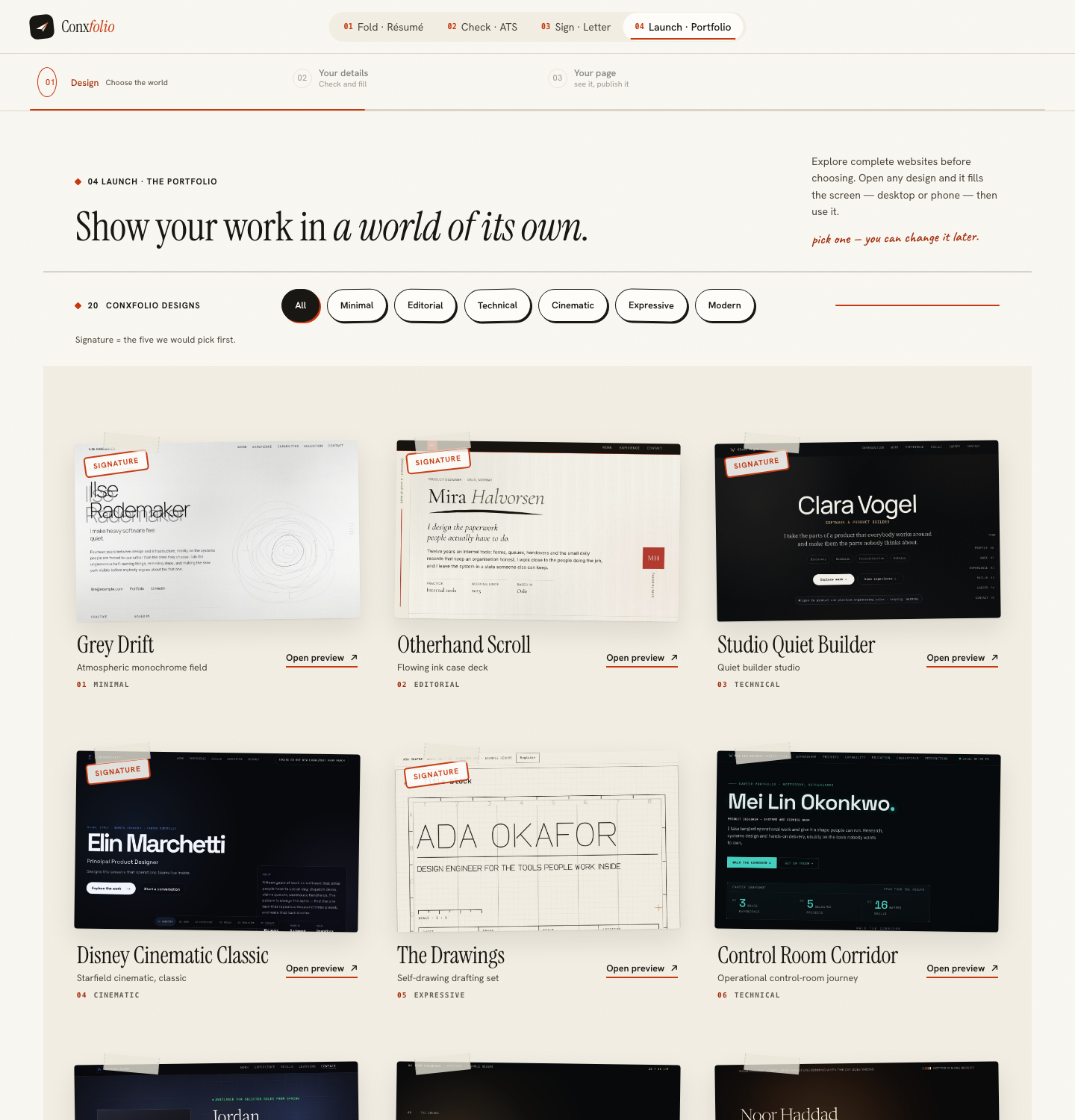
Twenty designs, and what they are
Each is a complete page, and the third step renders your real page at desktop and phone width before anything is public. What an authored design means here is in what an authored design means and designing twenty portfolio worlds.
Who this actually helps
Designers, writers and front-end developers, where showing the work is close to expected: for a designer, for a writer, for a developer. Also anybody whose work produces artefacts nobody sees in a document: a rebuilt process, a report, a room, a rota that worked. A portfolio without code covers that case.
When it is not worth it
When you have nothing to show. A page of headings with no artefacts under them is weaker than the résumé it came from, because it advertises the absence. The honest answer there is to spend the hour on the evidence lines instead, and how many projects to show is the page for that judgement.
The document still has to work
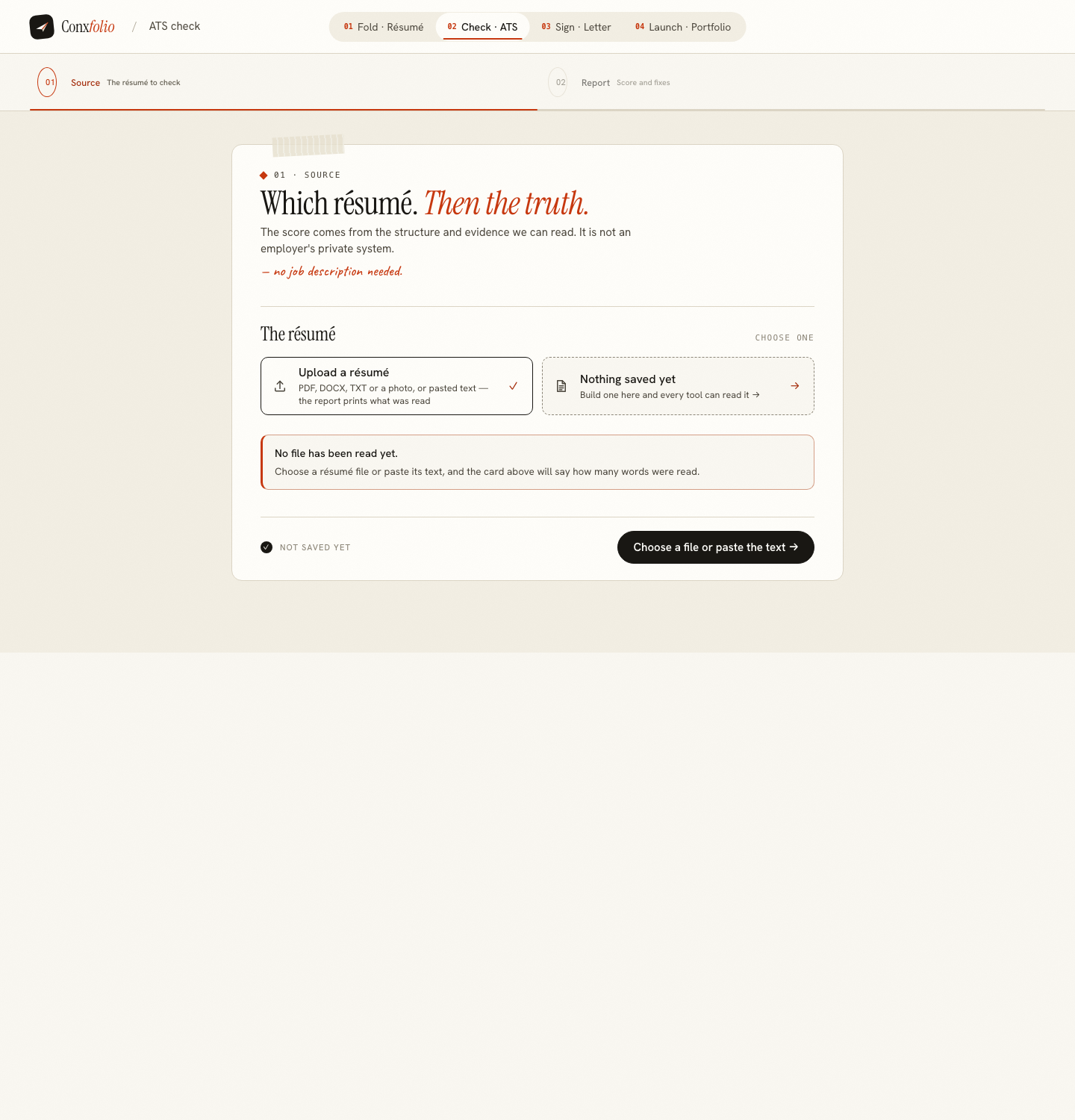
Run the ATS checker on the résumé first. The portfolio inherits its material, so a thin document produces a thin page, and the link on the résumé is what gets somebody to the page at all: linking a portfolio from a résumé.
The entry that carries the page
One good entry beats six thin ones. A good entry names the thing, says who it was for and what constrained it, shows an artefact, and says in one sentence what changed. Six entries that each give a title and a year tell a visitor that you have done six things and nothing about any of them, which is the same information a résumé already carried. Choosing the strongest two or three and writing them properly is the version worth the afternoon, and it is also the version that survives being read on a phone by somebody standing up.
What this page does not claim
That a portfolio gets anybody hired. Nothing here measures that and no page on this site says it. What is claimed is narrower: a page can carry an artefact and a résumé cannot, and for work whose evidence is visual or long, that difference is real. Whether to publish at all is a separate decision, weighed in publishing a portfolio or keeping it private.
One caution about what goes on a public page that does not apply to a document sent to one reader. A résumé goes to a person who asked for it; a published page goes to everybody, including a current employer and a client who has not announced a project. Material that is fine in an application can be a problem in public, and the third step renders the real page at both widths precisely so you can read it as a stranger before deciding, which is also why portfolio or GitHub is a question about audience rather than about tooling.
One structural advantage worth using. The page and the document are built from the same material here, so the entries improve together: a project written up properly for the portfolio usually yields a better résumé line, and a résumé with real evidence in it produces a page with something to show. Working on them in that order, document first and page second, is cheaper than doing either in isolation and is the reason the builder takes its material from the résumé rather than asking you to start again.
Start with the document the page is made from
The portfolio is built from the roles, projects and outcomes already in your résumé. Check that document first.
Open the ATS checkerWhat to put in a portfolioQuestions
- What can a portfolio show that a résumé cannot
- The thing itself: an image, a link, a longer description, a case study with a before and an after. A résumé line has one sentence to work with.
- Do I need one
- For design, writing and front-end work it is close to expected. For most other roles it is optional and useful where you have artefacts to show.
- Where does the material come from
- The roles, projects and outcomes already in your résumé. You switch on what belongs on the page and correct each entry.
- Does it write the entries for me
- No. It does not write your entries and it does not add projects you have not done.
- Is publishing free
- Yes, including the address. The only thing it asks for is an email verification, because an address has to belong to somebody.
Conxfolio is a free set of four career tools: a résumé builder with 37 rendered layouts, an ATS résumé checker that prints its own arithmetic, a cover letter builder that traces every proof paragraph back to the line it came from, and a portfolio builder with 20 authored designs. There is no account to create, nothing is held back for a paid plan, and no language model is used anywhere in the product, so the readers, the score and the letter are deterministic code you can check.