Watermarks, paywalls, and what comes out of our export
The watermark is the oldest arrangement in this category. It is worth knowing what ours does instead, which is nothing.
— export first, then decide whether to write.
A watermark turns an export into an advertisement. The person reading it learns which product you used and that you did not pay for it, which is two facts about you that have nothing to do with the job. It is also, for the document's purpose, unusable.
Why the arrangement persists
Because it works commercially. The sunk cost of an evening's writing is high, the moment of discovery comes late, and the price is small against that. None of which makes it a good experience.
What our export carries
We exported a document from the résumé builder and opened the file. It carries the document and three properties: a title made from the candidate's name and the word résumé, an author field with the same name, and a producer string naming the rendering engine. There is no mark on any page, and the same is true of the DOCX.
Both formats, every design
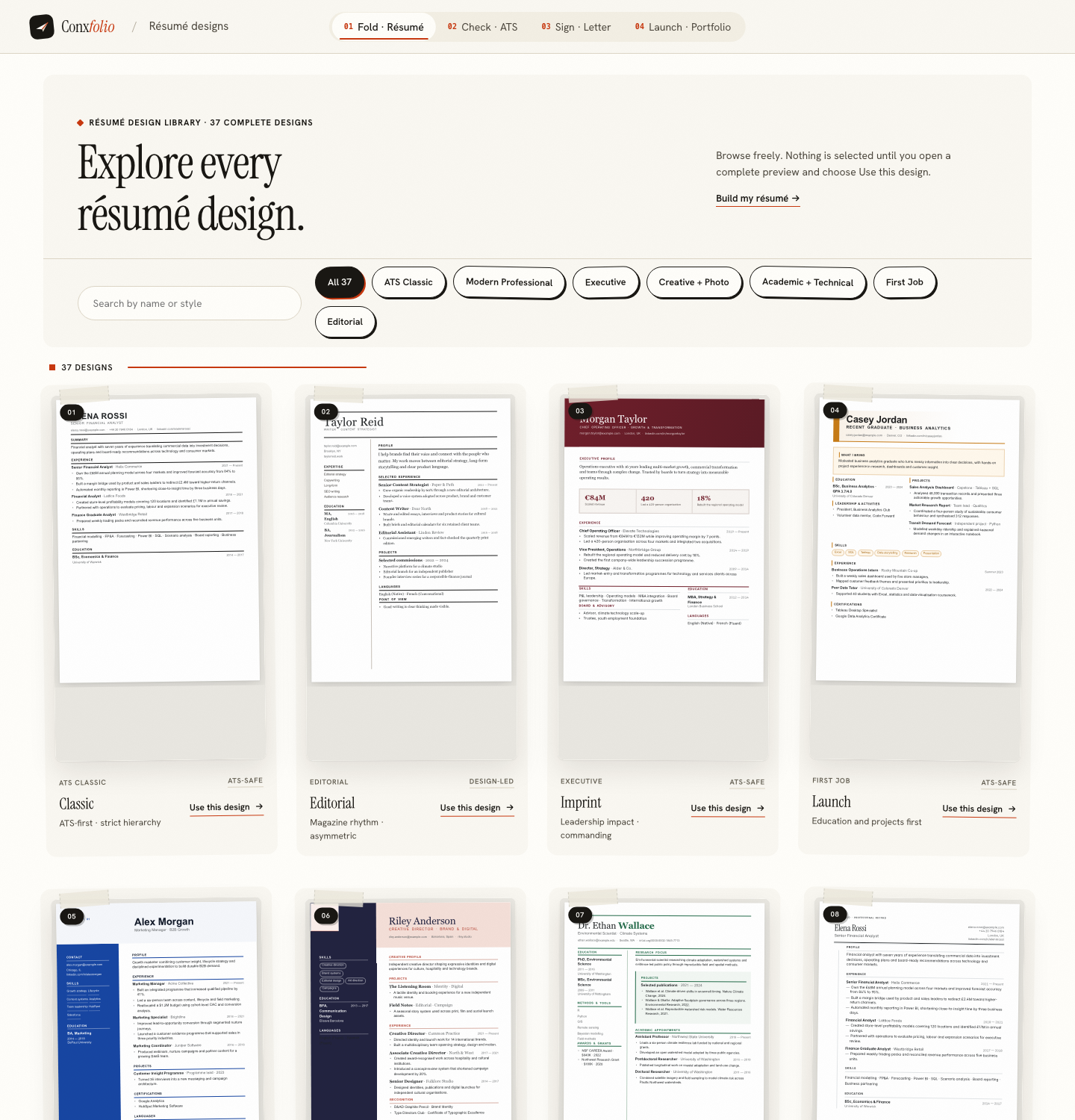
PDF and DOCX, in all 37 résumé designs and all 12 letter designs. The DOCX is assembled inside your browser, which is described in DOCX is built in your browser, and the PDF is rendered on our server in one call. Neither is a preview of a paid version.
The report is not held back either
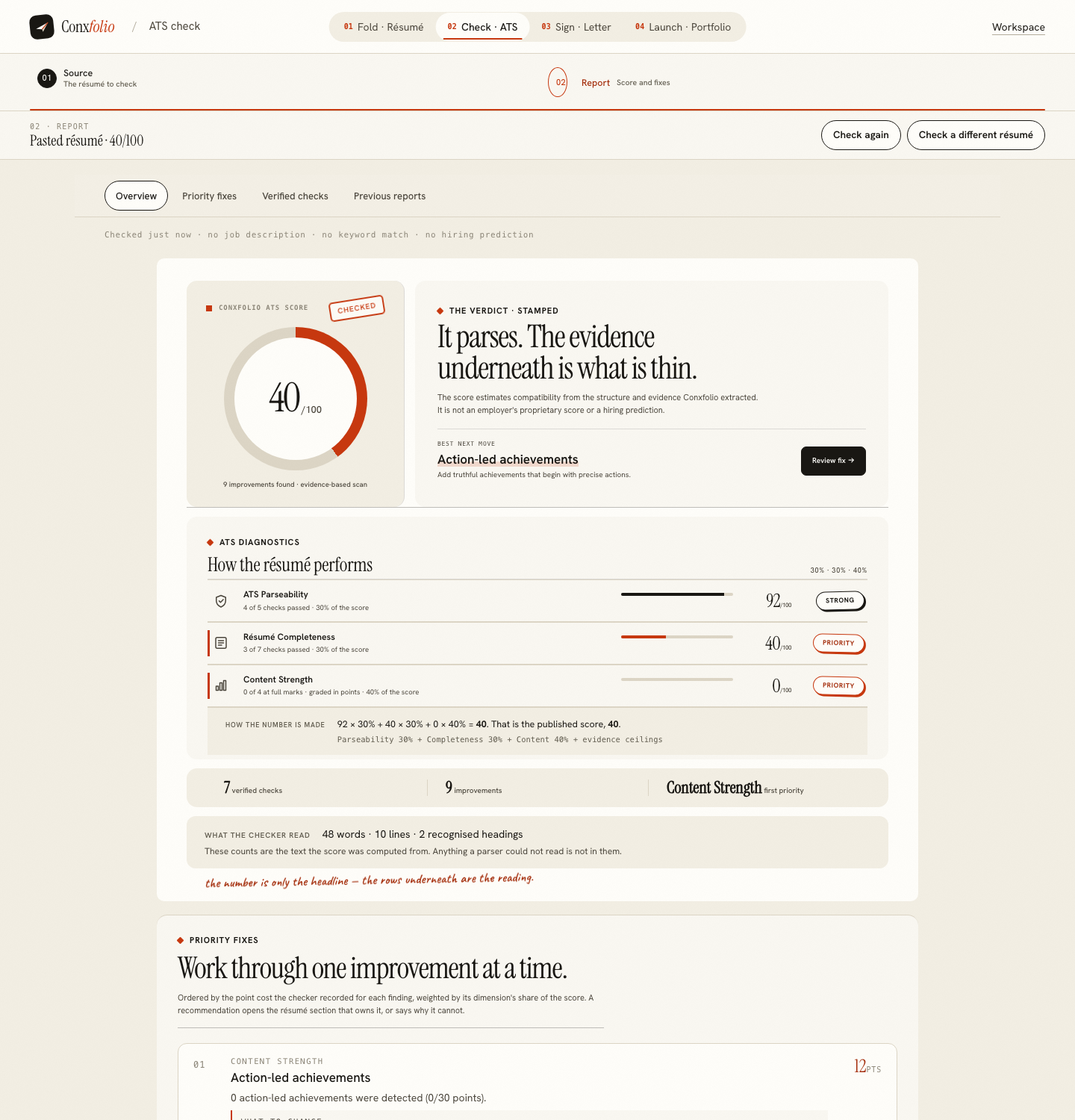
The ATS checker renders everything it found, including the multiplication behind the number. Holding findings back while showing a score is the checker version of the same arrangement, and it is covered in free tools that are not free.
The test worth running on any tool
Export a document before you write one. Type a name and one role, export, and open the file. Thirty seconds tells you what an evening would otherwise tell you at the wrong moment. This applies here as much as anywhere, and we would rather you did it.
Publishing carries no mark either
A published portfolio page is the page, without a badge in the corner. Publishing is free, including the address, and the only thing it asks for is an email verification so the address belongs to somebody. That mechanism is in publishing a portfolio or keeping it private.
Why the export is the honest place to look
Because it is the only part of a product that cannot be described away. A pricing page can use the word free in several senses, a feature list can be selective, and a preview can be generous. The exported file either has a mark on it or it does not, and that is settled in thirty seconds by exporting a document with a name and one role in it. Making that the first thing you check, rather than the last, is the single habit that saves the most wasted evenings in this category, and it applies to this product exactly as much as to any other.
What this page does not claim
That watermarking is dishonest, or that any named product does it. It is a pricing decision, disclosed or not, and products change their terms. What is claimed is about this one: no mark on either export, in any design, with no account and no plan. The file properties above are the entire content of the export beyond your document.
One related detail people ask about, because it is the other place a product can leave a fingerprint. The PDF's producer string names the rendering engine, which is ordinary for any PDF and appears on files from word processors too. It is a technical field in the document properties rather than anything printed on the page, and no reader sees it unless they open the file information deliberately. If you would rather the author field carried something different, it is derived from the name in your document, so changing that changes both, which is also what emailing a résumé notes about the file names.
A related pattern worth knowing about, because it is less obvious than a watermark. Some products export freely and keep the document inside an account, so the material is portable and the work is not. The test for that one is whether you can get your content out in a form another tool can read. Here the DOCX is assembled in your own browser, so the answer is yes by construction, and nothing about leaving requires our permission.
Export the document and look at it
PDF and DOCX, free, in every design, with no mark on either. Check what comes out before you spend an evening writing.
Open the ATS checkerThe export is the documentQuestions
- Is there a watermark on the export
- No. Neither export carries a mark, a logo or a trailing line, in any design.
- What does the exported PDF contain
- The document, and file properties: a title made from your name and the word résumé, an author field, and a producer string naming the rendering engine. We opened our own export and read them.
- Is DOCX treated differently from PDF
- No. Both are free and unmarked. The DOCX is assembled in your browser and the PDF is rendered on our server.
- Does any design export differently
- No. All 37 designs export the same way, and the ATS-safe mark is about structure rather than about price.
- What about the portfolio
- Publishing a portfolio is free too, including the address. A published page carries no mark of ours on it.
Conxfolio is a free set of four career tools: a résumé builder with 37 rendered layouts, an ATS résumé checker that prints its own arithmetic, a cover letter builder that traces every proof paragraph back to the line it came from, and a portfolio builder with 20 authored designs. There is no account to create, nothing is held back for a paid plan, and no language model is used anywhere in the product, so the readers, the score and the letter are deterministic code you can check.