Returning after a career break, and where the break actually belongs
A résumé is a record of work. A break is not work, and trying to make the document account for it is what turns two lines of explanation into a page of apology.
— one line, no apology, and then the evidence.
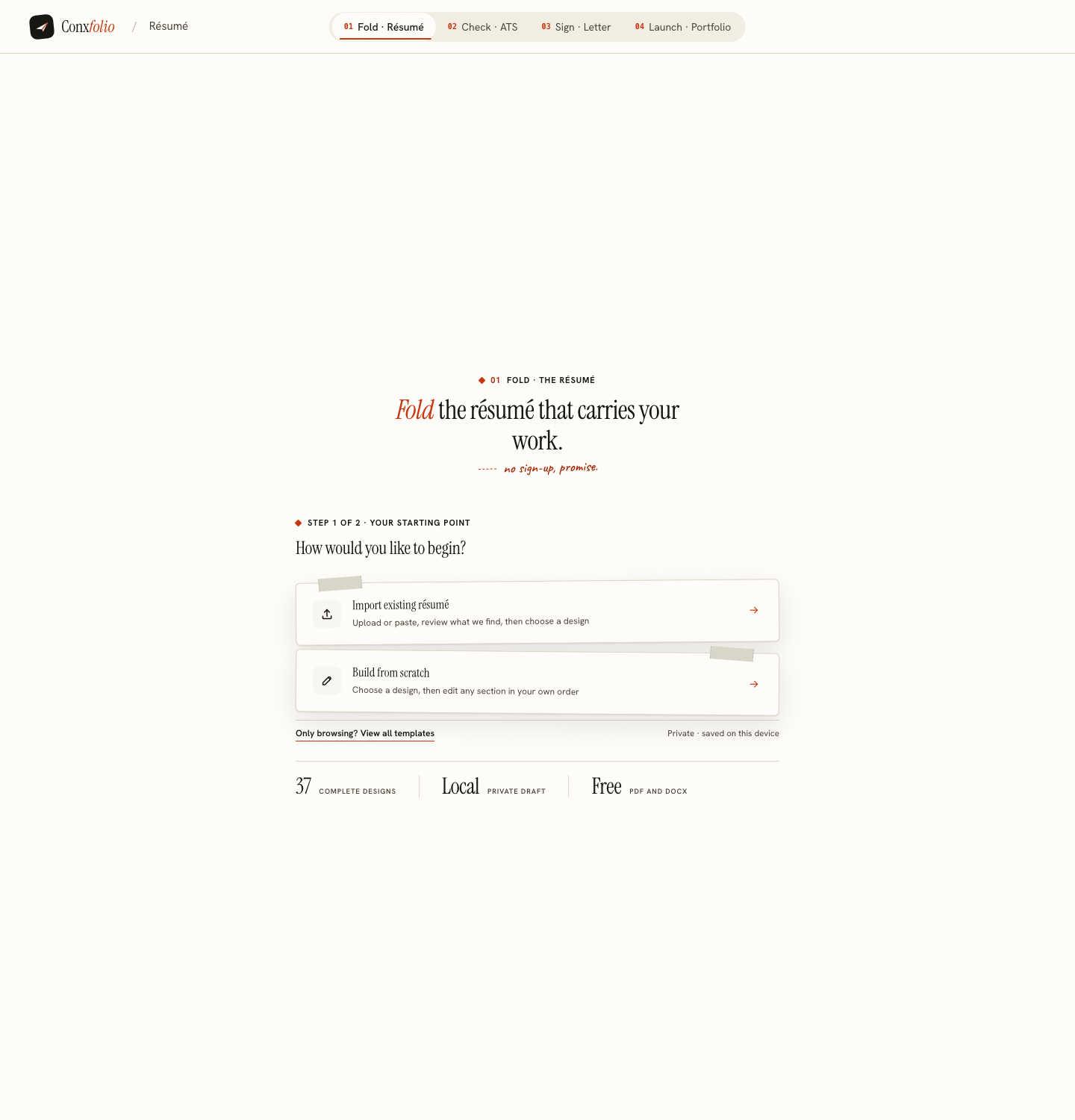
Coming back after two years out, the document is the easy part and it does not feel like it. The temptation is to make the résumé account for the break: a line explaining it, a reshuffled format to hide the dates, a paragraph at the top that begins by apologising. All three make the page worse. The résumé builder has no field for a break, and that absence is deliberate.
Start with the version you had
Whatever you last applied with is the fastest way in. Paste it or upload it at the first step; the reading sorts it into fields and prints what it found, reporting anything it could not fill rather than guessing. Then the work is bringing it up to date, which is a much smaller job than writing a résumé from nothing.
The gap is not a rule in the checker
The ATS résumé checker has no rule about employment gaps. It grades parseability, completeness and content, and an unaccounted year does not appear in any of the seventeen checks it runs. If you were expecting a penalty, there is not one here. What there is instead is a measurement of whether the document reads.
What the break actually cost the page
Currency, usually, rather than continuity. The most recent evidence is two years old and the most recent achievement line is older than that. That does show up, in the content rules, because the lines that carry figures and outcomes are the ones from before. The fix is to write what is current: a course, a return-to-work placement, volunteering with a real scope, freelance work, a committee. How to explain a career gap covers which of those belong on the page.
Formats, and the cost of hiding
A skills-led document is the usual advice for a gap and it has a price. Our own measurements found a résumé whose work was filed under projects rather than experience losing the completeness rule's experience check outright, worth thirty of its hundred points, and a ceiling holding the published score below the weighted total. That is set out in evidence ceilings explained. Chronological, functional or hybrid has the whole comparison.
Where the explanation goes
Into the letter, in one sentence, without apology. The cover letter builder has an optional field for what only you know, in your own words, and it is the one place in the product designed for a fact the résumé cannot carry. Everything else in the letter is selected from your own résumé lines and traced back to them, so the sentence about the break sits among proofs rather than in place of them.
Working in short sessions
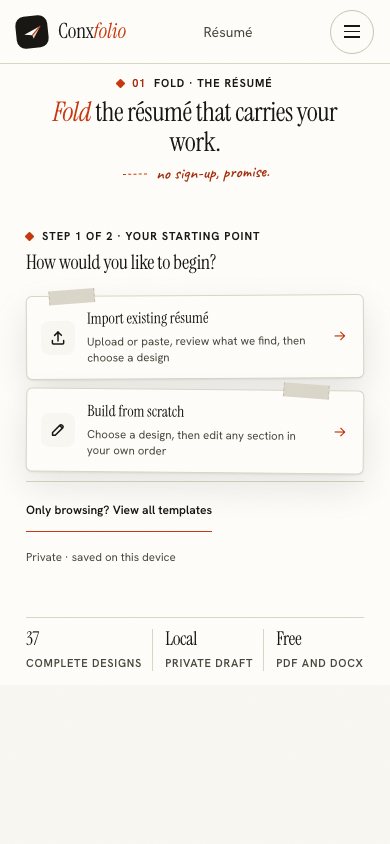
The document is saved in this browser as you go, and the save routine reads the bytes back before it reports that it saved. There is no account and no session to lose, which is described in why there is no account. The cost of that trade is that clearing your browser data clears the work, so export a copy of anything that matters.
What to do in the first hour
Import the old file. Correct the contact details, because the phone number or the email may have changed and the completeness rule checks both. Write one current entry, whatever it is: a course, a placement, a voluntary role with a real scope. Then run the check and read the counts rather than the number, and fix the finding with the largest price on it.
That is an hour, and it produces a document you can send. The longer work, which is rebuilding the evidence for a market that has moved, happens over the following weeks and is easier once something exists. Where the unpaid work of the break itself belongs on the page rather than in the letter, the measurement in unpaid work on a résumé covers how to write it so a parser reads it as experience.
What nobody here can tell you
Whether an employer will ask about it. The checker is not an employer's system, uses no job description and predicts nothing, and no page on this site claims a document gets anybody hired. What the product can do is give you back a readable, evidenced page and a letter that only says what your evidence supports. The résumé and CV guide and how far back a résumé should go cover the rest of the rebuild.
Start from the version you had
Import the résumé you last used and bring it up to date. It stays in this browser and there is nothing to sign up for.
Open the résumé builderRead the career gap guideQuestions
- Is there a field for a career break
- No. The product has no gap field and makes no claim about how to present one. The additional section takes a heading you choose, which is where people usually put a named break if they want it on the page.
- Will a gap lower the score
- Not directly. The checker has no rule about gaps. It measures parseability, completeness and content, and an unexplained year does not appear in any of them.
- Should I use a functional format to hide it
- That is a real trade-off with a cost, and it is covered in the formats guide. A skills-led document is harder for a parser to read as experience, and our own measurements show what that does to the completeness rule.
- Where should the explanation go
- The letter. The cover letter builder has an optional field for what only you know, in your own words, and that is the one place in the product designed for a sentence the résumé cannot carry.
- Is anything I type here stored on your servers
- The work is kept in this browser. Text is sent when you run the ATS check, ask for a letter draft or export a PDF, and nothing else leaves.
Conxfolio is a free set of four career tools: a résumé builder with 37 rendered layouts, an ATS résumé checker that prints its own arithmetic, a cover letter builder that traces every proof paragraph back to the line it came from, and a portfolio builder with 20 authored designs. There is no account to create, nothing is held back for a paid plan, and no language model is used anywhere in the product, so the readers, the score and the letter are deterministic code you can check.