The checker has no opinion about page count, and a reader has a strong one
Two thirds of résumé advice is about length. The measurable part of it is smaller than that, and the controls for it are two sliders.
— a page that ends four lines late is a slider problem.
Almost every argument about résumé length is conducted without evidence, because the people arguing have no access to the systems they are arguing about. It is worth separating the part that is measurable from the part that is taste.
What the rules measure
The scoring engine behind the ATS checker works on extracted text. It counts words, lines and recognised headings, and it has no concept of a page. There is no deduction for a second page, no bonus for one page, and no rule that mentions pages at all. What it does have is a readable volume rule worth up to 20 points: 250 words or more earns the full 20, 120 earns 12, 60 earns 5, and less than that earns nothing.
The floor is real and the ceiling is low

Our test document, a two-role engineering résumé, came in at 162 words and lost 8 points of volume for it while still publishing 97 overall. That is the shape of the rule: having almost nothing is expensive, and having a great deal is worth nothing extra. Anyone padding a résumé past 250 words for a score is working for a number that stopped moving.
The part that is taste, and it is not arbitrary
A recruiter's first pass over a page is a few seconds long. What survives that pass is structure: a name, a current role, three or four lines that carry numbers. White space is what makes the structure findable, and a page with no air on it is slower to read even when it contains more. That is why a dense two-page document often loses to a spacious one-page document that says less.
Two controls, in the right order
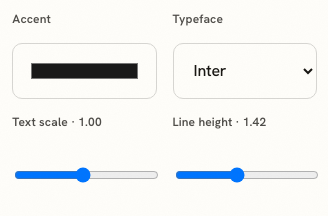
Text scale first, from 0.86 to 1.16 in steps of 0.02 over the whole document. A page overflowing by four lines usually fits at 0.94, and nobody notices. Line height second, from 1.2 to 1.7, starting at 1.42. Dropping to 1.35 buys another few lines and is still comfortable; going under 1.3 makes the page feel airless, and going over 1.6 makes a short document look padded. Both are in the design mode, and neither touches a word, as covered in typography on a résumé.
When to stop adjusting and start cutting
When the scale is at 0.9 and the page still spills. At that point the document is full, and the next move is editorial rather than typographic: drop the role from fifteen years ago, cut the bullets that carry no number, and merge the two skills lists. The report is a useful second opinion here, because its fix list is ordered by what each change is worth and it will tell you if the evidence you are about to cut is the evidence carrying the score.
Where a second page is normal
After roughly a decade of relevant work, in academic and research applications where publications are the evidence, in technical roles with a genuine tools and systems section, and in countries where a longer document is the convention. In those cases a one-page résumé is doing the reader a disservice by hiding the thing they are looking for.
Where it is not normal is early in a career, where a second page is usually school-leaving detail, an interests section and a list of software everyone has. The test is not the page count. It is whether every line on page two would survive being read aloud to the person hiring. Anything that would not belongs in the cut, and the fix list on the report will tell you if you are about to cut the evidence that is carrying the score.
The honest summary
One page is a convention, not a rule, and no software here enforces it. Two pages are normal for a decade of experience and wasteful for two years of it. The measurement cares that there is enough readable evidence; the reader cares that it can be found in six seconds. Those two things agree more often than the advice suggests, and where they disagree, the reader wins. The counts the measurement is working from are printed on every report, as described in what the checker read.
Fit the page without cutting evidence
Text scale and line height are in the design mode. Move them before you delete a role, and check the result against the report.
Open the résumé builderSee what the checker countsQuestions
- Does a two-page résumé score worse here
- No. The scoring engine reads text, not pages, and has no page-count rule at all. What it does have is a readable volume rule that rewards having enough words.
- How many words does the volume rule want
- 250 or more earns its full 20 points, 120 earns 12, 60 earns 5. Below 60 it earns nothing, and under 25 words the whole score is capped at 15.
- So longer is always better
- Only up to 250 words. Past that the rule pays nothing more, and everything after it is a judgement about the reader's patience rather than about the measurement.
- Which control should I move first
- Text scale, which runs from 0.86 to 1.16. It changes the whole document proportionally, so a page that overflows by a few lines usually fits at 0.94.
- When should I actually cut something
- When the scale is below about 0.9 and the page still overflows. At that point the page is full, and the honest edit is to drop the oldest role or the least relevant bullets.
Conxfolio is a free set of four career tools: a résumé builder with 37 rendered layouts, an ATS résumé checker that prints its own arithmetic, a cover letter builder that traces every proof paragraph back to the line it came from, and a portfolio builder with 20 authored designs. There is no account to create, nothing is held back for a paid plan, and no language model is used anywhere in the product, so the readers, the score and the letter are deterministic code you can check.