The picture in the gallery is a photograph of the page it opens
A gallery is a promise about what you will get. The only way to keep it is to make the picture out of the thing itself, and to make the picture expire.
— a stale poster is a lie with a cache header on it.
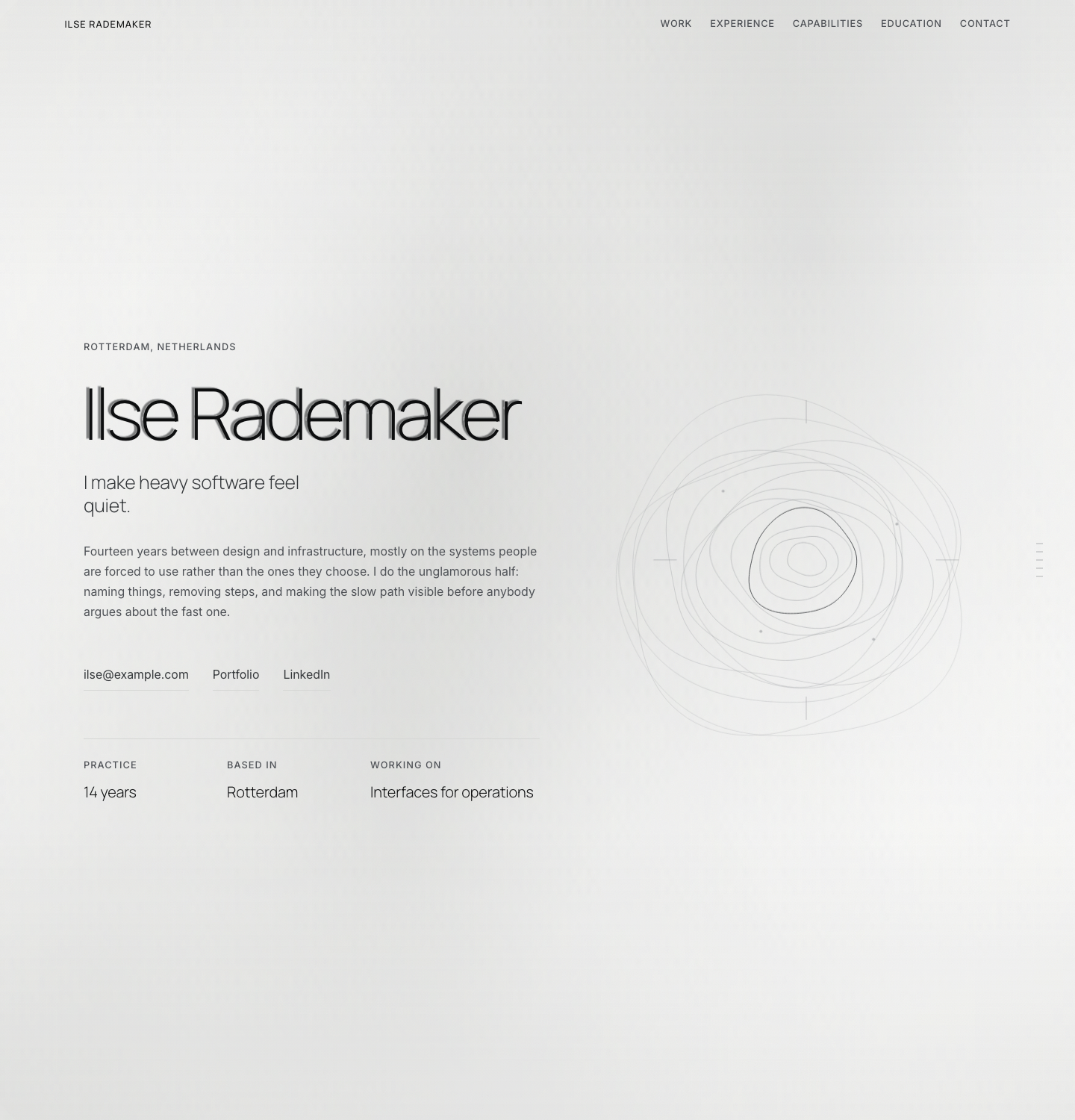
Every template gallery on the internet is a set of pictures of pages, and pictures are the easiest thing in a product to let rot. The design gets rebuilt, the screenshot does not, and a year later the gallery is advertising a layout that no longer exists. Nobody is lying on purpose. The pictures simply stopped being attached to anything.
The gallery behind the portfolio builder is built so that they stay attached.
Where the pictures come from
Each design ships as a built page with its own stylesheets and its own motion, and beside that page sit two captures of it: a poster for the gallery card and a full-page image. They are generated from the page rather than drawn for the gallery, so the only way for a card to be wrong is for somebody to regenerate the page and not the capture.
The cache problem, which is the real one
Art like this is served with a long cache life, because it never normally changes. That means a regenerated poster written to the same address keeps serving the old bytes to everybody who has seen the gallery before, for hours, while looking completely correct from the inside. The fix in use is a version marker on the image addresses: the marker moves when the art is regenerated, so the address changes with the bytes and nothing can be served from a previous version.
Then the card opens the page
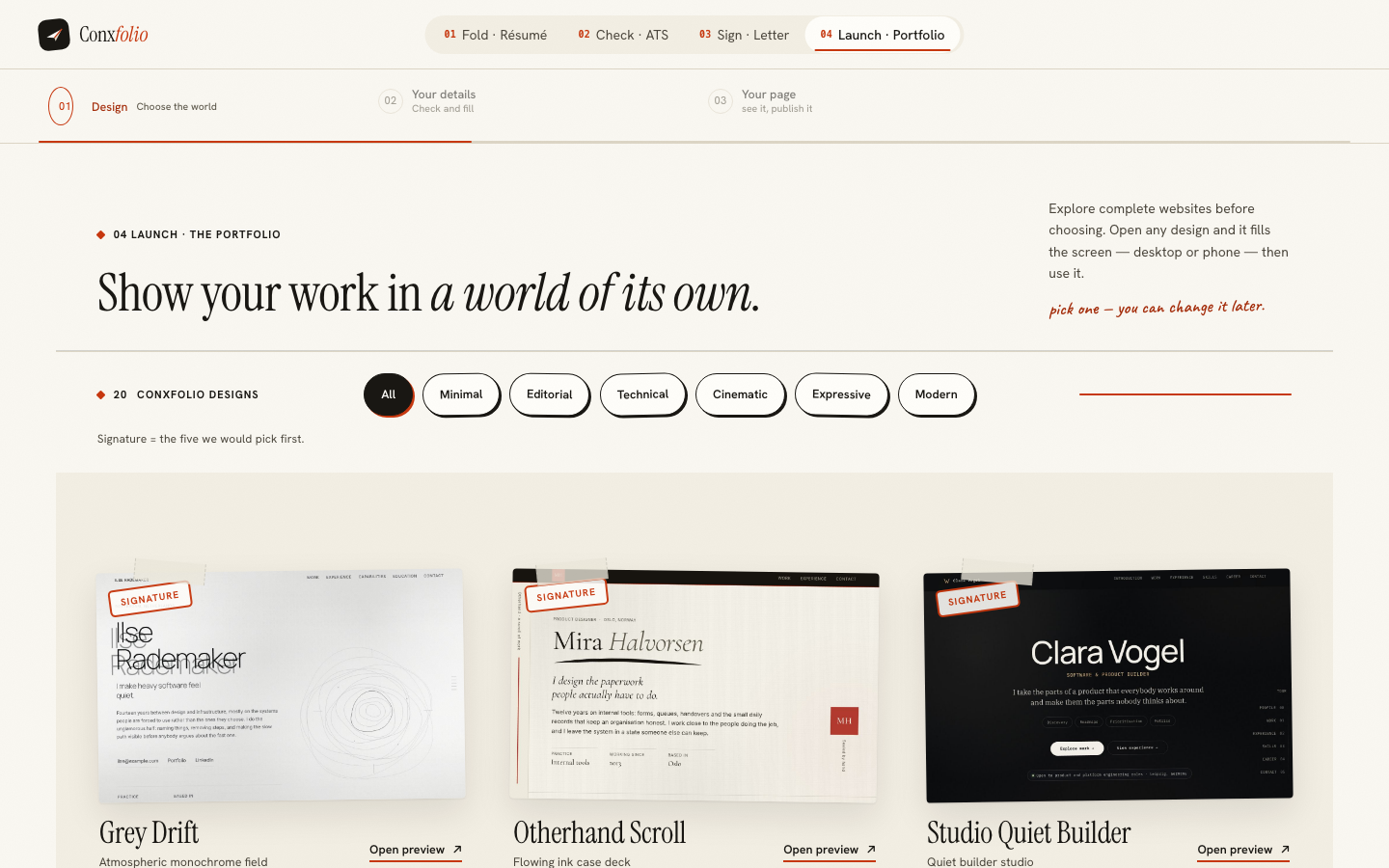
The check that matters is available to you and takes a second: click the card. The design opens at full size with its name, its direction, a position counter, a device switch and a button to use it. If the page that fills the screen is the page on the card, the gallery is honest. Doing this to three cards is a faster audit than any promise on the page could be.
Why not render all twenty live
Because they are websites. The résumé and letter galleries do render live, since a document draws in milliseconds, which is why those pages show complete documents rather than thumbnails. Twenty portfolio pages with their own motion, rendering at once, would produce a gallery nobody could scroll. The compromise is a picture that is made from the page and cannot outlive it.
What the poster is not showing
Your material. The sample person on each poster is invented, and your own roles, projects and outcomes arrive when you take the design into the builder. The page you get will have the design's structure and your content, which is a different picture from the poster and the same page, as explained in what an authored design means.
What a stale preview costs a reader
It is a small dishonesty with a long tail. Somebody chooses a design from a picture, builds a page around it, and finds that the layout they chose was replaced months ago. They cannot tell whether the product changed or whether they misremembered, and the next time they look at any preview here they will discount it. A gallery is a promise made a hundred times, and it only has to be broken once to stop being read.
Attaching the pictures to the pages and moving the address when the bytes move is not clever engineering. It is the minimum required for the gallery to keep being evidence rather than advertising, which is the same standard the rest of these pages are written to: every number printed here came off a screen we photographed.
The same rule, one step later
Once your content is in, the page step renders the real page again at desktop and phone width before publishing, so the last preview you see is also made of the thing itself. That step, and the width that actually matters, are in phone width is the page that publishes. The full set of designs and how they are grouped is in designing twenty portfolio worlds.
Open a poster and check it
Click any card in the gallery. The page that fills the screen is the page the picture was taken from.
Open the portfolio builderBrowse the portfolio designsQuestions
- Are the gallery images screenshots of the real designs
- Yes. Each design ships with a poster and a full-page capture taken from the page itself, alongside the page's own files.
- How do you stop an old picture being served
- The image addresses carry a version marker that changes when the art is regenerated. A regenerated poster at an unchanged address would keep serving the old bytes from a cache for hours, which is exactly how a gallery goes quietly stale.
- Why not render every card live instead
- The résumé and letter galleries do, because a document renders quickly. A portfolio page is a whole website with its own motion, and twenty of them rendering at once would make the gallery unusable.
- Does the poster show my content
- No. The poster shows the design's own sample page with an invented person on it. Your content appears the moment you open the design or take it into the builder.
- What if a design changes after I chose it
- Your page uses the design as it is served. The point of tying the pictures to the pages is that the gallery cannot show you one thing and give you another.
Conxfolio is a free set of four career tools: a résumé builder with 37 rendered layouts, an ATS résumé checker that prints its own arithmetic, a cover letter builder that traces every proof paragraph back to the line it came from, and a portfolio builder with 20 authored designs. There is no account to create, nothing is held back for a paid plan, and no language model is used anywhere in the product, so the readers, the score and the letter are deterministic code you can check.